threelilprincesses.com

Tag: Guest Post

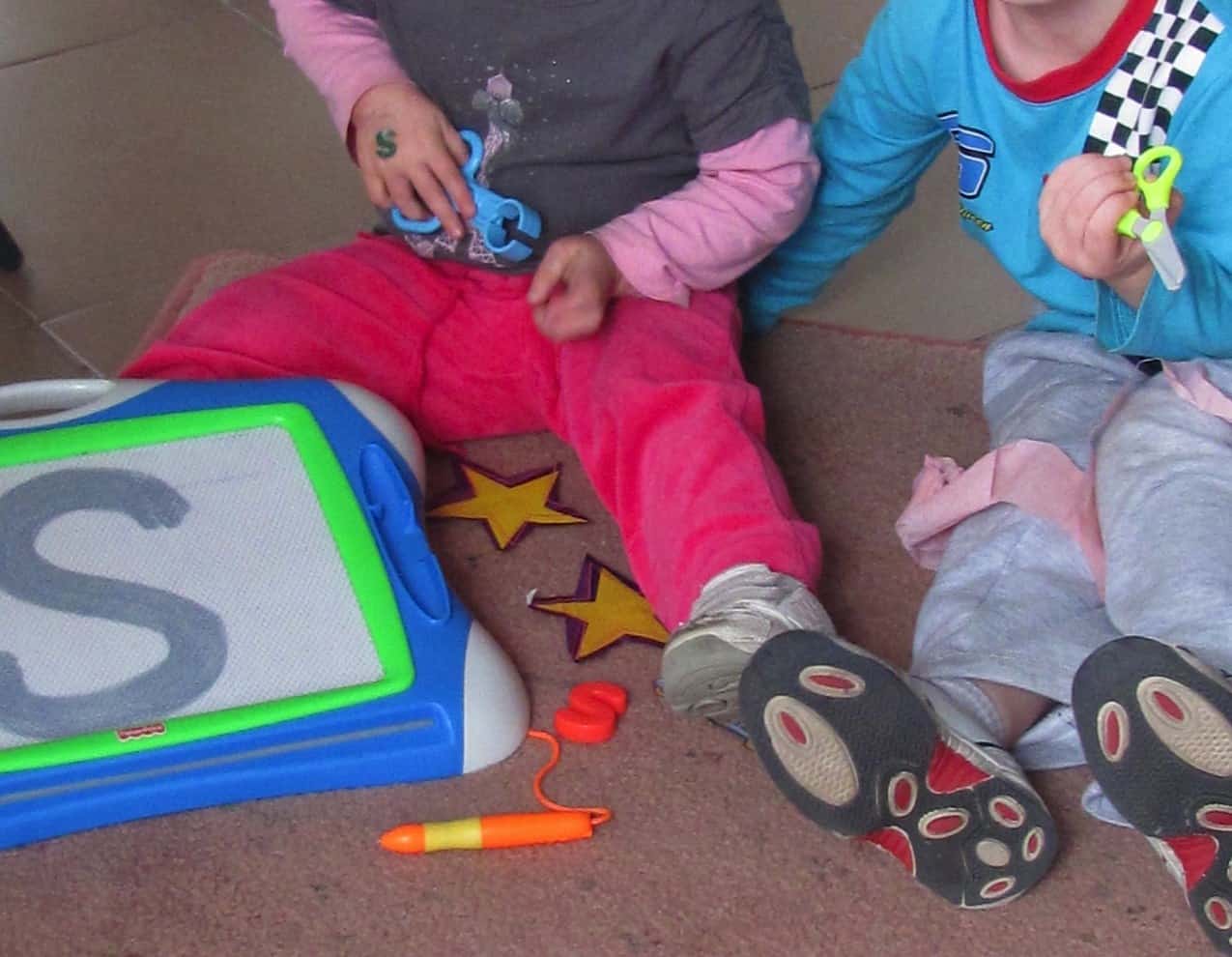
  • Alphabet Photography Challenge – S

    Alphabet Photography Challenge – S

    S is for sister and stars. How many times can you spot the letter S?

    Alphabet Photography Challenge S

    By Denyse Whelan of Denyse Whelan.com.au

    Denyse loves to take photos. Favourites are always those of her willing subjects:“the grandkids”. Since the first grandchild was born in 1996 till now, Denyse has made albums and scrapbooks for all 5 of them. Photos are her way of making memories. As a teacher of little kids too, Denyse loved combining her love of teaching and photography to become part of The Alphabet Photography Challenge.  She blogs over atwww.denysewhelan.com.au and hangs out on Twitter.

    If you would like to contribute a photo to the Alphabet Photography Challenge, a series of posts aimed at being a “look and find” activity for children learning the alphabet, please email.
    Linking up with My Little Drummer Boys’ Wordless Wednesday. Click on the link to check out more photo posts.
  • Guest post: The uniqueness of family

    Guest post: The uniqueness of family

    family photo Tahlia Mandie The Parenting FilesTHIS post is by the wonderful Tahlia Mandie of the parenting files – because families matter and was inspired by two posts previously published here on Three Li’l Princesses. As a mum and psychotherapist, Tahlia provides some fabulous views on the topic of “family size and age gaps”.

    THE thing about families is that they are all unique. Like no two-finger prints are the same, no two families are the same. Even those that come from the same blood line and generational line… still unique.

    Kellie’s post on What’s Your Ideal Family Size? and What’s The Ideal Ideal Age Gap Between Children? raised some really great discussion and thought. So when the question of ideal was discussed, I could not help wonder what does ideal mean anyway?

    Every answer was different, every story was different, and every thought and opinion was different.

    There are lots of two’s in our family… our close immediate family that is. If I tracked back into my family tree I think I would find a maximum of three siblings. With eighteen months between my brother and I, we have always been close. Yes, we have had our fair share of wanting to throttle the other growing up, but now, as mature adults, we are pretty solid. I know he has got my back, and I have his.

    Watching Brothers and Sisters religiously every week I was always inspired, in awe, and fantasising about that type of large family. The one where there is at least one person popping in every day, different dynamics, different shoulders to lean on, and for brothers and sisters to share their love differently across the large family. There is large laughter, excitement, entertainment and even dare I say it, drama.

    There was always something happening.

    There is always something happening.

    So if I had to put a label on my ideal, this would be it – a large family of four children, hopefully with a mix of boys and girls, and a varied age gap between each.

    But that is the thing about ideals; it is unique, individual and special. My ideal, my dream and my fairytale are my own created from my own experience, family relationships and dynamics. Something that comes from my value system and what is important to me.

    We can try and plan, but yet we all know that plans sometimes do not work. Sometimes life takes us on a journey in a way that was not expected, not anticipated and certainly not even contemplated.

    So as we evolve through life and grow through life, the fairytale has been adjusted somewhat. The man I married and his values and experiences, finances, priorities, life and simple genetics have impacted on this.

    So maybe the question is not about what the ideal is, but rather, how we evolve, adjust and accept what has been given to us. How do we learn to change our once picture perfect fairytale to adapt to our current living, personal and relationship stage? There are certain things that sometimes we can’t control.

    So I have my ideals, this is okay. As of today, we have one beautiful little girl. As of tomorrow, who knows… maybe my fairytale ideal will come true. Maybe it won’t. Maybe I need to adapt my ideals. This is ok. I know it will be okay. One way or another my dreams have come true.

    {photo by Realtography}

    Tahlia Mandie is a psychotherapist, family counsellor and mum who runs her own private practice, Direction Exploring and now runs her own blog, the parenting files – because families matter. Discussing all things parenting and family matters to the serious stuff to the not so serious stuff, the parenting files is spoken with a little witt, quirk and humour. Tahlia also writes regular columns and articles for magazines, newspapers and other online forums.

  • Guest post by the international bestselling author of The Wonder Weeks

    Guest post by the international bestselling author of The Wonder Weeks

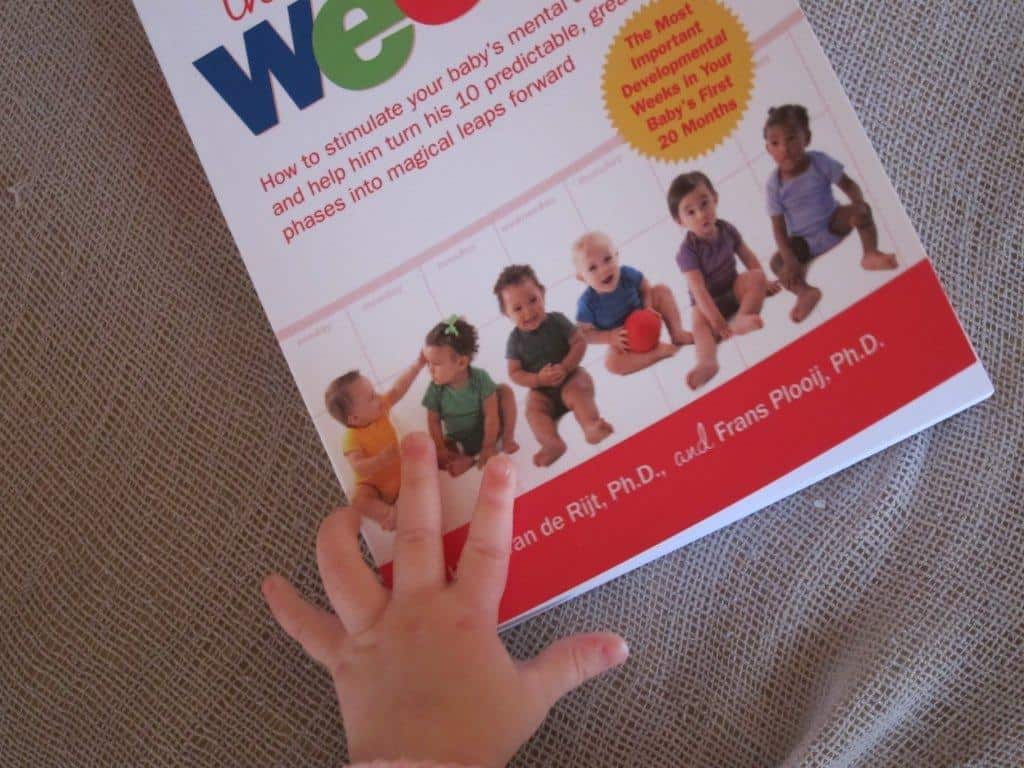
    The Wonder WeeksTHREE Li’l Princesses feels especially honoured today to have international bestselling author of The Wonder Weeks book, Frans Plooij Ph D, guest posting. Frans has been so incredibly generous already, allowing TLP readers to win copies of his latest, extended version of The Wonder Weeks book and iPad/iPhone apps (closes September 21, 2011).

    He has now graciously provided additional tips to help as you progress through your baby’s “fussy periods”. I know, what did I do to deserve such an honour?

    Frans is one of the world’s top specialists in infant/child development. His book, based on 35 years of extensive research, describes in an easy-to-read manner the developmental changes babies go through during their first 20 months of life. You can learn more at The Wonder Weeks website or connect with Frans via the Wonder Weeks Facebook page and Twitter. Alternatively, you can buy a copy of the book. But now, without further ado, I hand you over to the wonderful Frans.


    What is Mental development?

    From a scientific perspective, “Mental development” is the natural growth of the brain and entire nervous system from a few neurons making connections in the embryo, all the way to the fully functioning brain and nervous system of an adult. Just like other physical body parts, the brain grows, adds new functionality, and matures. As it does (in stages, on nature’s schedule) the cranium grows, neurons are added, neuronal networks are created, and successively higher levels of perceptual control emerge.

    This is not a gradual process but it goes in leaps and bounds. With each leap, a new level of perceptual control is created, giving a whole new cluster of skills to be learned and mastered.

    These new, higher levels of perception begin to emerge one after the other in rapid-fire. In the first 20 months of life there ten such leaps.

    Why is a baby Crying, Clingy and Cranky?

    baby crying

    With each leap your baby can think, feel, notice and understand what is happening around him in a new way. He enters, so to speak, a new perceptual world. As amazing as this is, it is also scary for the baby. That is why, before he is comfortable exploring this new perceptual world, a baby often cries more, is more clingy and crankier.

    @ the first leap at 5 weeks: What does your baby see?

    A newborn baby cannot accommodate or focus the eyes, yet.  He can only see clearly at a distance of about 20-30 cm. He can see the rest, yes, but it is all very blurry. After taking the first leap, the leap of sensations, however, he can focus on objects at a greater distance. Even up to 75 cm! His “sharp visual world” becomes about three times as large.

    Imagine if this happened to you… Think about how it would impact you. Would it affect your sense of balance? Would you lose your sense of proportion and distance? As an adult, you can think about those changes and reflect on them. But a baby can’t. He’s having a very difficult time with these types of changes.

    Help your baby explore his new world through sight. He will look at objects that interest him for longer, and the brighter the colors, the more fascinating! He will also like striped and angular objects. And, of course, looking at you.

    @ the sixth leap  at 37 weeks: Making Categories at the Children’s Farm:

    cow close up

    You probably have read dozens of books already to your little one featuring cows, pigs and other animals found at a farm. He already knows what they look like on paper. But in reality they look completely different! By seeing an animal in real life (and not just a quick view of a cow from the backseat of a car while driving past it), he can make a relationships between a picture of a cow on paper and the real thing it stands for. By hearing a cow mooing, he can make a relationship between the way you say “moo” and the real sound. This allows him to know what exactly is a cow, how it really looks and sounds, and to know what belongs in the category “cow” and what does not.

    Controlled crying, to do or not to do?

    I am not a fan of controlled crying for babies. To be frank, for younger babies, I wouldn’t use controlled crying at all. If your baby cries, he needs you. He feels off balance, and wants you to comfort him.

    Sometimes, people say that your baby will get spoiled or take advantage of you, if you always comfort him. That is not true. Why? It is simple – because your baby’s mental development is not at the same level at which we (adults) think. We adults would argue, “If I cry, I’m pretty sure mom’s gonna come get me.” A baby cannot use this kind of strategy until the ninth leap in his mental development, which comes at about 15 months of age. This means that you cannot spoil a baby before that age as far as comforting and love are concerned.

    Too Busy to Sleep During a Mental Leap (Fussy Phase)?

    baby child sleep

    Some babies have such a strong natural drive to master skills after having made a leap, that they don’t take the time to sleep until they are successful. You see this behavior already at a rather young age.

    These babies don’t allow themselves any sleep before they have reached their goal. It is very demanding for them – and for you! In later life, it is a character trait that may be very useful, but at this young age, these children must sometimes be protected from themselves and the demands they are putting on themselves.

    Instead, put the emphasis on trying something. Praise him for his efforts, regardless of the outcome. That way, you distract your baby. If you find that it really requires too much from him, take a break. Get him out of that challenging environment for a while and do something calmer with him, like reading a book.

    @ the ninth leap at 15 months: Start setting rules!

    When making the ninth leap, a baby is able to understand rules and act accordingly. No, let me rephrase: a toddler is literally craving for rules. This is THE time to start setting rules. If you do so, you will prevent the terrible two’s from ever becoming so terrible.

    Your baby tells you when it is too much

    Parents cannot love their baby enough, but they can pay too much attention to their baby! The maximum time or amount or intensity of attention is different for every baby and can differ per day. The only way to find out  when you have reached your baby’s limit is to follow your child: he is your guide. You wonder what the sign is that tells you he needs a break? He turns his head away form you or the toy. Give him a few seconds, stop talking, and don’t try to force your face in his line of vision. Wait until he turns to you again. That is the moment when you can start your conversation or play again. Even (and especially) with young babies!

    Afraid to go to bed?

    baby asleep in cot

    Does your baby cry the moment you put him down in his bed? Try this: let him fall asleep on your lap. Wait until he is in a deep sleep. You can test this by taking a hand, and letting it drop. If it drops like a bag of potatoes would, he is sound asleep and you can put him to bed!

    Don’t want to be a police-mom?

    Setting rules and living up to them is important. But… what if this means that you are becoming a no-saying police-mom? Try to rank-order your rules. Be sure to have just a few absolute no rules. Be creative about the other rules. Don’t wait until your toddler does something, but distract him before that happens. This way he can handle the number of rules and you do not have to be a police-mom.

    What Wonder Week are you now at? How are you finding it? You can check the chart to see whether you’re in the midst of one.

    Photo credits: baby crying, cow, baby asleep and Baby Holly asleep in her cot.
  • Alphabet Photography Challenge – T

    Alphabet Photography Challenge – T

    T is for Toys. How many T’s can you count?

    Alphabet Photography Challenge

    Photo by Hege Nolan

    Hege is a South Melbourne-based photographer. She’s been taking photos for a long time, but hasn’t taken the plunge to leave the office and do it full time. She is currently shooting with a Canon EOS 50D, with a couple of different lenses and a speedlite. You can find see more of Hege’s work on Red Bubble.

    If you would like to contribute a photo to the Alphabet Photography Challenge, a series of posts aimed at being a “look and find” activity for children learning the alphabet, please email.

    Linking up with My Little Drummer Boys’ Wordless Wednesday. Click on the link to check out more photo posts.

  • Guest post: Managing spendthrift husbands and family budgets

    Guest post: Managing spendthrift husbands and family budgets

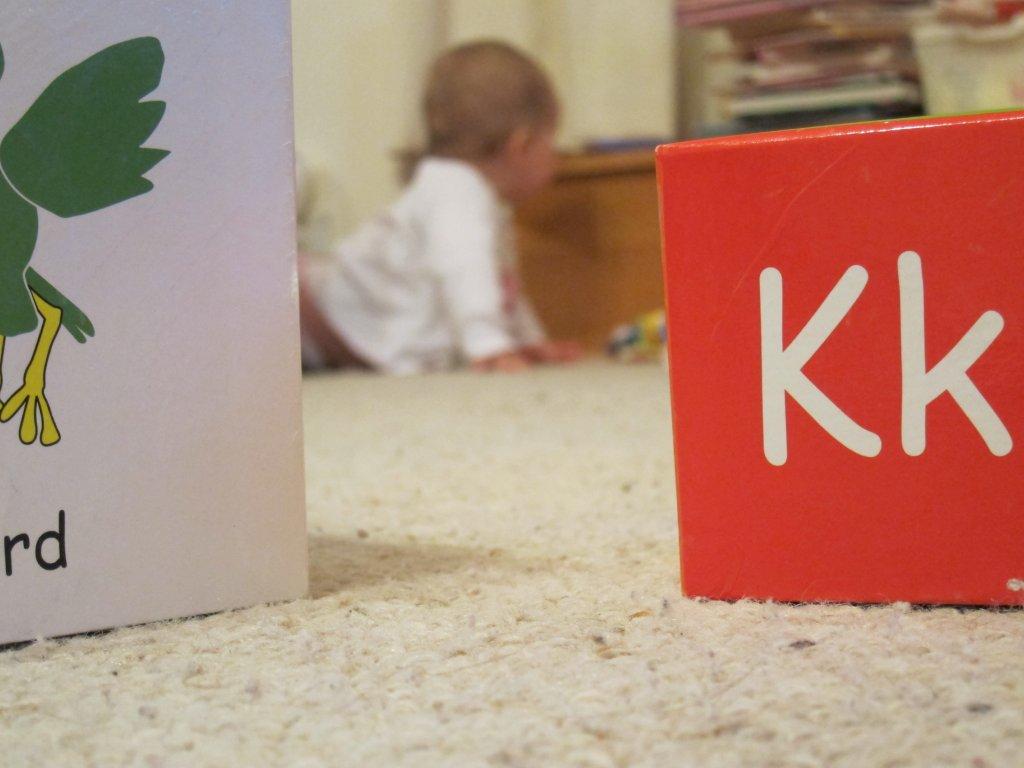
    The letter K
    I'm a letters, not numers person!
    THERE’S a reason I became a journalist. Like alcohol and Mel Gibson, numbers and I don’t mix very well. So when my number-genius friend Amie and I started talking family finances and spendthrift husbands (mine, at least), it made sense to ask her to write something on how she manages the family budget. While as the treasurer of the household I sometimes think I’m doing a better job than Wayne Swan, there is certainly room for improvement. And Amie’s tips are so easy to follow and implement.

    By Amie Bramich
    This is my budgeting technique that has been with me since I first moved out of home; it has evolved through uni, buying a home, a wedding and now a family.
    It is not complicated but it does seem to be working fairly efficiently for us as a family, I think it would be suitable for those who pool their incomes and those who like to keep them separate.  It is ideal for keeping track of those day-to-day living expenses!  You don’t need much – a list of your costs broken down to your particular income frequency and a few envelopes.
    Below is a step-by-step guide for getting started and a few tips along the way!
    1. Identify regular income sources and frequency
    • I have tended to not include bonus income such as tax refunds; but rather see these as a savings bonus or for special family treats such as mini breaks.
    2. Identify as best you can all regular fixed costs.
    • This can seem a daunting task, I have found that it is best to not over think this, rather let it naturally evolve with your budget.
    • Keep the categories broad and leave a little room in your allocations for those unexpected items.
    3. Now check your totals!
    • I have always done this out to a weekly and an annual level, ensuring your income covers your costs on pay day and over the year.
    • This is an interesting exercise as it gives you a big picture of where your cash is going!
    4. Label envelopes (or if you prefer a folder) as you have cash expenses with the required amounts.  Then as the bills roll in you have the cash needed!
    This technique can be adapted for those who prefer to leave their cash in the bank account with a spreadsheet instead of envelopes.
    In my experience the hardest part of this technique (and any other budgeting method) is sticking to it!  Also, try not to “borrow” from your bill stash, this can lead to trouble!
    You can download a larger version of the test budget worksheet by clicking the image. NB: Aurora is the supplier of Tasmania’s electricity.
    family budget spreadsheet
    Do you have a technique for managing the family budget? Or, like me, do you battle a spendthrift husband?
  • Alphabet Photography Challenge – P

    Alphabet Photography Challenge – P

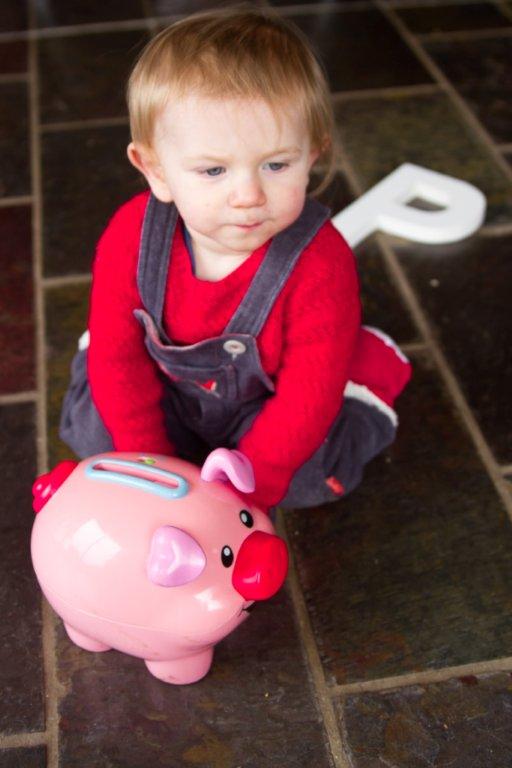
    P is for Piggy. Can you spot the “p”?

    Alphabet Photography Challenge, P

    Photo by Nicole Hastings

    Nicole has loved taking photos since she had her first film camera at 14. After doing photography in college and just not getting it, she went back for a second try in 2006.  Having her children to photograph made photography fun and worthwhile and she greatly improved. Nicole just upgraded her DSLR and hopes to start a photography business one day, but for now she blogs her photos at Nicole Hastings Photoblogging. You can also follow her on Twitter.

    If you would like to contribute a photo to the Alphabet Photography Challenge, a series of posts aimed at being a “look and find” activity for children learning the alphabet, please email.

    Linking up with Faith Hope & A Whole Lotta Love’s Wordless Wednesday.