threelilprincesses.com

Category: Books and Reading

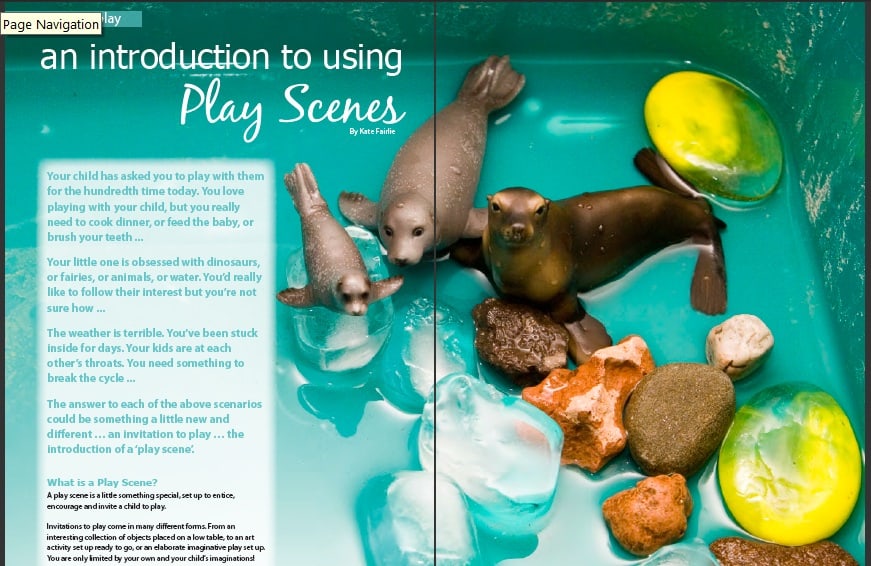
  • The launch of a new eZine – Play Grow Learn playzine review

    The launch of a new eZine – Play Grow Learn playzine review

    FORCED to stay indoors due to falling under the spell of the snotty-nosed monster last week, we three princesses were thankful the wonderful Christie Burnett of Childhood 101 had sent through issue one of her inspiring Play Grow Learn playzine to review.

    Play Grow Learn playzine

    Most of you already know who Christie is. But, just incase your internet connection’s been down for the past two years, Christie’s a mummy blogger and early childhood educator. Her blog Childhood 101 has become our regular haunt. What appeals most is its focus on learning through play – it’s this point that was the clincher for the school we’ve chosen for Ella. So it’s easy to see why the quote:

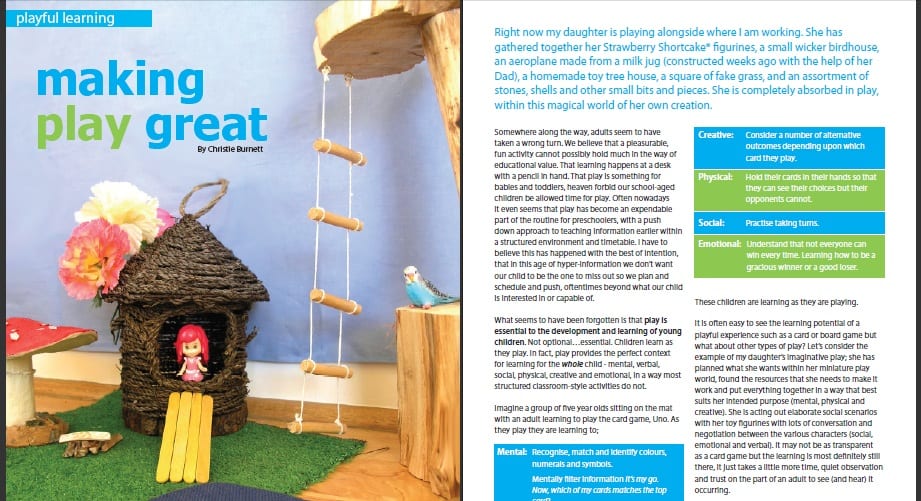
    “What seems to have been forgotten is that play is essential to the development and learning of young children. Not optional…essential’’.

    from the playzine stood out for me.

    Each article provides enough information to answer the “why’’ behind each play activity, along with detailing the actual play ideas themselves.  The only point I’ll make is it’s probably best to set aside some time when you’re minus children to read it. Or you could inadvertently become hooked on an article, prompting someone to get rather impatient with you.

    play grow learn Childhood 101 playzine

    Some of the highlights for us (and particularly Ella) were:

    • The full-colour printable set of Snap cards. Ella asks to play Snap endlessly, so the opportunity to have a special set of cards is all too exciting.
    • The photo of the magical play space. This one set imaginations running wild. Guess what we’re doing this week?
    • With the arrival of Spring, there’s seven pages of outdoor play ideas.
    • The 30-plus baby play ideas have been particularly useful for Baby Holly and I on those days when Ella is in childcare.
    • The Playing with Maps article. Our family became close to a Swedish exchange student, who has only just returned home. Ella has a fascination now with knowing how far away he is in relation to her grandparents in the next town over. It was a great reminder that we need to get her a map to enhance her geographical knowledge.
    • Eight classic play ideas that take less than 10 minutes to prepare – perfect for a particularly impatient little girl.
    • The article on Creating Memorable Birthdays. With both girls marking birthdays in the next two months, this article was particularly useful. There are some fabulous ideas I’d like to implement for the girls’ big days.
    • A quick no-sew superhero cape tutorial. Need I say more.

    Beautifully photographed and designed, it also combines the writing talents of some fabulous mums and teachers, including:

    The incredible part about the whole thing is it’s a meagre $4. Yes, only $4 for 62 full-colour pages of indoor and outdoor play ideas for children from birth to five years. When getting to a newsagency to buy a magazine becomes less likely, this is a perfect alternative.

    For more information, visit the Play Grow Learn page. You’ll be thankful you did.

    Linking up with the lovely Kate Says Stuff’s Thankful Thursday. Click on the link to find out what others are thankful for this week.

  • Guest post by the international bestselling author of The Wonder Weeks

    Guest post by the international bestselling author of The Wonder Weeks

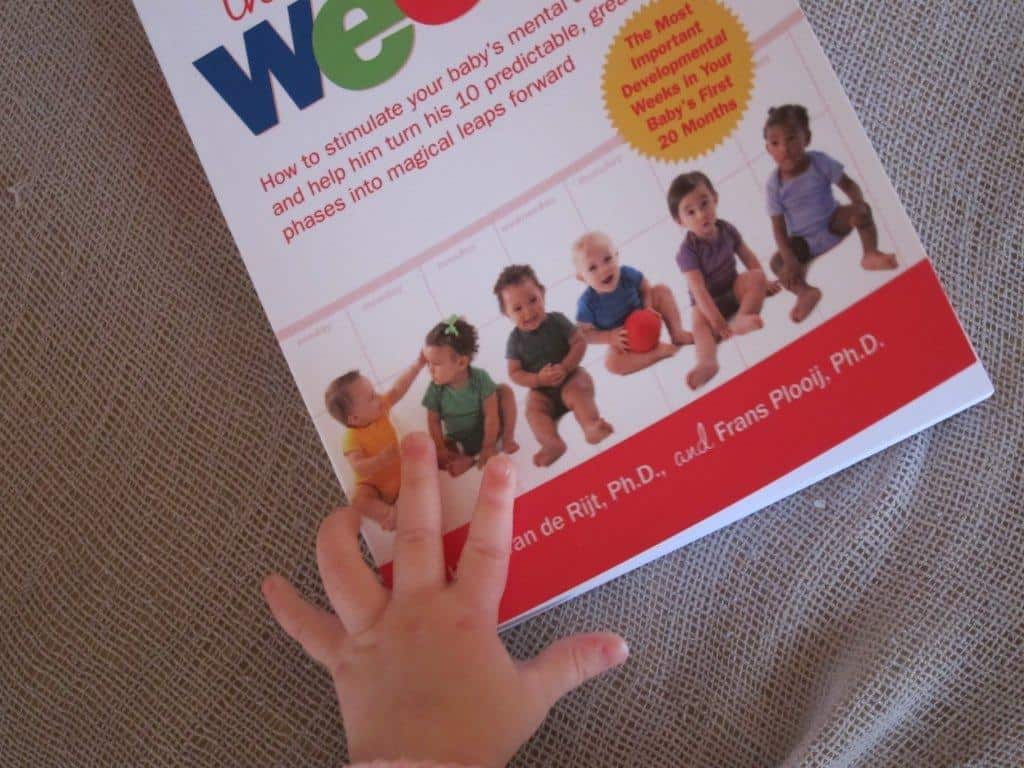
    The Wonder WeeksTHREE Li’l Princesses feels especially honoured today to have international bestselling author of The Wonder Weeks book, Frans Plooij Ph D, guest posting. Frans has been so incredibly generous already, allowing TLP readers to win copies of his latest, extended version of The Wonder Weeks book and iPad/iPhone apps (closes September 21, 2011).

    He has now graciously provided additional tips to help as you progress through your baby’s “fussy periods”. I know, what did I do to deserve such an honour?

    Frans is one of the world’s top specialists in infant/child development. His book, based on 35 years of extensive research, describes in an easy-to-read manner the developmental changes babies go through during their first 20 months of life. You can learn more at The Wonder Weeks website or connect with Frans via the Wonder Weeks Facebook page and Twitter. Alternatively, you can buy a copy of the book. But now, without further ado, I hand you over to the wonderful Frans.


    What is Mental development?

    From a scientific perspective, “Mental development” is the natural growth of the brain and entire nervous system from a few neurons making connections in the embryo, all the way to the fully functioning brain and nervous system of an adult. Just like other physical body parts, the brain grows, adds new functionality, and matures. As it does (in stages, on nature’s schedule) the cranium grows, neurons are added, neuronal networks are created, and successively higher levels of perceptual control emerge.

    This is not a gradual process but it goes in leaps and bounds. With each leap, a new level of perceptual control is created, giving a whole new cluster of skills to be learned and mastered.

    These new, higher levels of perception begin to emerge one after the other in rapid-fire. In the first 20 months of life there ten such leaps.

    Why is a baby Crying, Clingy and Cranky?

    baby crying

    With each leap your baby can think, feel, notice and understand what is happening around him in a new way. He enters, so to speak, a new perceptual world. As amazing as this is, it is also scary for the baby. That is why, before he is comfortable exploring this new perceptual world, a baby often cries more, is more clingy and crankier.

    @ the first leap at 5 weeks: What does your baby see?

    A newborn baby cannot accommodate or focus the eyes, yet.  He can only see clearly at a distance of about 20-30 cm. He can see the rest, yes, but it is all very blurry. After taking the first leap, the leap of sensations, however, he can focus on objects at a greater distance. Even up to 75 cm! His “sharp visual world” becomes about three times as large.

    Imagine if this happened to you… Think about how it would impact you. Would it affect your sense of balance? Would you lose your sense of proportion and distance? As an adult, you can think about those changes and reflect on them. But a baby can’t. He’s having a very difficult time with these types of changes.

    Help your baby explore his new world through sight. He will look at objects that interest him for longer, and the brighter the colors, the more fascinating! He will also like striped and angular objects. And, of course, looking at you.

    @ the sixth leap  at 37 weeks: Making Categories at the Children’s Farm:

    cow close up

    You probably have read dozens of books already to your little one featuring cows, pigs and other animals found at a farm. He already knows what they look like on paper. But in reality they look completely different! By seeing an animal in real life (and not just a quick view of a cow from the backseat of a car while driving past it), he can make a relationships between a picture of a cow on paper and the real thing it stands for. By hearing a cow mooing, he can make a relationship between the way you say “moo” and the real sound. This allows him to know what exactly is a cow, how it really looks and sounds, and to know what belongs in the category “cow” and what does not.

    Controlled crying, to do or not to do?

    I am not a fan of controlled crying for babies. To be frank, for younger babies, I wouldn’t use controlled crying at all. If your baby cries, he needs you. He feels off balance, and wants you to comfort him.

    Sometimes, people say that your baby will get spoiled or take advantage of you, if you always comfort him. That is not true. Why? It is simple – because your baby’s mental development is not at the same level at which we (adults) think. We adults would argue, “If I cry, I’m pretty sure mom’s gonna come get me.” A baby cannot use this kind of strategy until the ninth leap in his mental development, which comes at about 15 months of age. This means that you cannot spoil a baby before that age as far as comforting and love are concerned.

    Too Busy to Sleep During a Mental Leap (Fussy Phase)?

    baby child sleep

    Some babies have such a strong natural drive to master skills after having made a leap, that they don’t take the time to sleep until they are successful. You see this behavior already at a rather young age.

    These babies don’t allow themselves any sleep before they have reached their goal. It is very demanding for them – and for you! In later life, it is a character trait that may be very useful, but at this young age, these children must sometimes be protected from themselves and the demands they are putting on themselves.

    Instead, put the emphasis on trying something. Praise him for his efforts, regardless of the outcome. That way, you distract your baby. If you find that it really requires too much from him, take a break. Get him out of that challenging environment for a while and do something calmer with him, like reading a book.

    @ the ninth leap at 15 months: Start setting rules!

    When making the ninth leap, a baby is able to understand rules and act accordingly. No, let me rephrase: a toddler is literally craving for rules. This is THE time to start setting rules. If you do so, you will prevent the terrible two’s from ever becoming so terrible.

    Your baby tells you when it is too much

    Parents cannot love their baby enough, but they can pay too much attention to their baby! The maximum time or amount or intensity of attention is different for every baby and can differ per day. The only way to find out  when you have reached your baby’s limit is to follow your child: he is your guide. You wonder what the sign is that tells you he needs a break? He turns his head away form you or the toy. Give him a few seconds, stop talking, and don’t try to force your face in his line of vision. Wait until he turns to you again. That is the moment when you can start your conversation or play again. Even (and especially) with young babies!

    Afraid to go to bed?
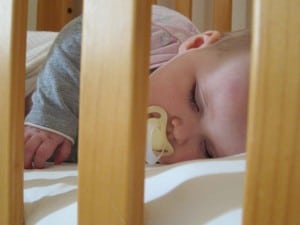
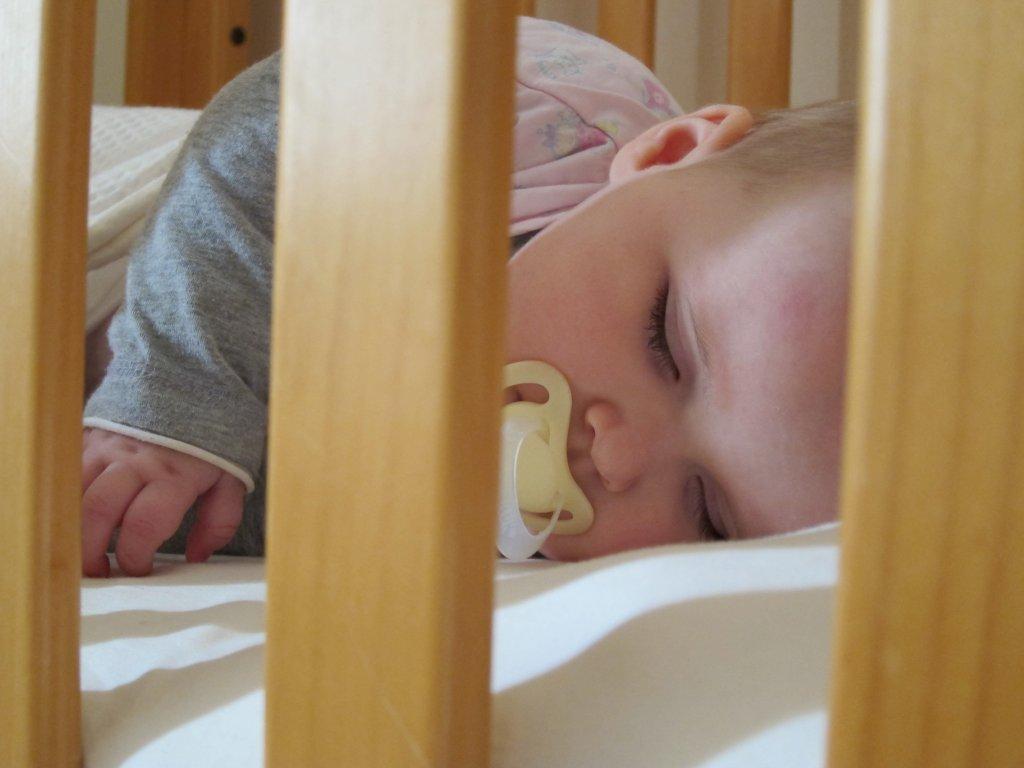
    baby asleep in cot

    Does your baby cry the moment you put him down in his bed? Try this: let him fall asleep on your lap. Wait until he is in a deep sleep. You can test this by taking a hand, and letting it drop. If it drops like a bag of potatoes would, he is sound asleep and you can put him to bed!

    Don’t want to be a police-mom?

    Setting rules and living up to them is important. But… what if this means that you are becoming a no-saying police-mom? Try to rank-order your rules. Be sure to have just a few absolute no rules. Be creative about the other rules. Don’t wait until your toddler does something, but distract him before that happens. This way he can handle the number of rules and you do not have to be a police-mom.

    What Wonder Week are you now at? How are you finding it? You can check the chart to see whether you’re in the midst of one.

    Photo credits: baby crying, cow, baby asleep and Baby Holly asleep in her cot.
  • Revisiting the book that stopped me crying

    Revisiting the book that stopped me crying

    WONDER Week 37 has come complete with the return of The Diva. The fussy, crying, clingy, sleep-challenged full-on Baby Holly. Yes, move over Diana Ross.

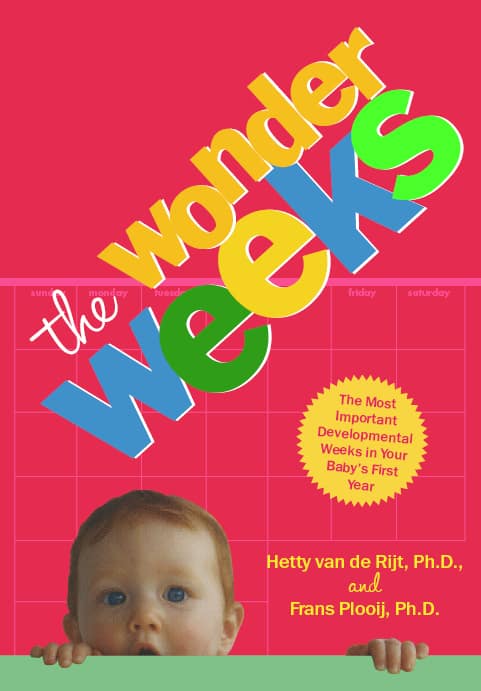
    As explained in my last post, The Wonder Weeks is a book by Hetty Vanderijt and Frans Plooij which has uncovered the eight “fussy’’ phases in the first 14 months of bub’s life and shows you how to turn them into magical leaps forward.

    The problem is I thought the bittersweet Wonder Week 37 had been and gone. Sure, there was the li’l cold and the emergence of the rabbit teeth, but the little bit of cranky during that period was surely the developmental leap. It seems not. On the weekend, we hit week 39 and Baby Holly’s delayed reaction to Wonder Week 37. Kind of like Charlie Sheen’s delayed reaction to now being a nobody. And this Wonder Week’s a doozie. Again, just like Sheen.

    This sixth developmental stage – and by stage I mean mega Opera House-sized stage considering the drama that’s ensued – is called The World of Categories. Baby Holly is:

    • Learning about things belonging together. The example given is “a banana looks, feels, and tastes different than spinach, but they are both foods’’.
    • Her language skills are also continuing to develop, picking up “Ella’’ but still not “mum’’. Hmm. Through her speech development, she’s also beginning to understand a lot more of what I say to her (except for “please, please, say mum just once’’).
    • She’s understanding names and objects, so when I ask her where something is (like Ella), she looks for her.
    • Is mimicking what I do. After patting her on the back the other day when she was coughing, she started patting my shoulder in response. She then laughed when I started coughing.
    • She’s trying to master the art of crawling. She gets up on all fours, does a bit of a rock, tries to get her limbs to move forward and then nosedives. Cue: crying. Thanks to the WW there’s a lot of this happening, especially when it comes to settling of a night.

    Here’s what we’re doing to help her development during Wonder Week 37:

    • Giving her blocks in different sizes to play with
    • Reading her touch and feel books and material books
    • Helping her stack the rings on the pole
    • Playing in and next to her tunnel toy. This helps her learn about space.
    • Sitting in front of the mirror and talking together

    Afterwards, babies are expected to have a greater awareness of their surroundings and can often be more independent.

    I’ve already posted about Week 26, provided a copy of the Wonder Week chart, reviewed the book and had author Frans Plooij guest post. There’s more about the new expanded version of the book on the official Wonder Week site. But to learn more about the Wonder Weeks themselves, buy the book (affiliate link).

    How do you cope with your children’s fussy periods?

  • FEATURE: First Foods I Fed My Frills ebook review

    FEATURE: First Foods I Fed My Frills ebook review

    WE’VE been blessed with two girls who rarely turn up their noses to new foods. We’ve always credited three-year-old Ella’s wide and varied tastebuds to trying all manner of foods when she was starting out. She now loves olives, mushrooms, sundried tomatoes (sometimes) and eggplant (if it’s on homemade pizza). We’re hoping to strive for the same outcome with Baby Holly. (Me? Well, that’s a different story. I just cannot do olives.)

    With Holly reaching eight months, sometimes I need a bit of recipe inspiration, especially when I like to cook everything myself. Holly’s already started on the finger food. Vol-au-vents and canapes, of course. Although, I’m learning again how there’s a fine line between learning to feed yourself and just throwing the food down like it’s going out of fashion. Talk about a choking hazard.

    As an avid reader of the Frills In the Hills blog, I was more than a little excited to hear Liss had released the ebook First Foods I Fed My Frills. I was secretly hoping there might be an opportunity to review it and there was. Although, to be honest, at a rather affordable $5 I would have been more than happy to pay for it.

    What I like is that mum-to-three Liss doesn’t preach hard and fast rules. It’s more about what’s possible at certain stages and letting parents know each child is different. This I can vouch for. There are also some wonderful resources at the end, a list of equipment (including one rather ingenious invention) and some handy snack food ideas.

    Holly in her high chair ready to eat.

    The most appealing part of the book for me though was the recipes for the whole family. I’m not into doing different meals for different family members, so it was here I needed the most inspiration. And I got it. The book is written in Liss’ usual conversational tone and is well worth a look for mums navigating their way through introducing their bubs to solids and the six months beyond that.

    I’ve signed on as an affiliate for Liss, so you can buy the book by clicking on the picture in my sidebar there. Well worth the $5 investment.

    What solids did your bub enjoy when starting out?

    **DISCLAIMER: I received a copy of First Foods I Fed My Frills for review. All opinions expressed are purely my own.

  • FEATURE: Top eight infant books and how they’re affecting your child

    FEATURE: Top eight infant books and how they’re affecting your child

    THE O’Brien house is filled with books. Every room has a book or bookshelf of some sort. There’s even a book over there in the middle of the kitchen floor at the moment (must pick that up in a minute).

    Now that Ella is three, she’s looking for more advanced stories. She likes her big thick book of fairytales (Jack and the Beanstalk is her fave) and her Winnie the Pooh chapter book. It’s meant the rule of three or four books at bedtime has had to be cut to one or two, otherwise we’d be reading ‘til midnight.

    Despite Ella becoming a “big girl’’ and wanting to take over the reading role (more on that in a later post), we’re discovering all those baby books Ella so loved once again through Baby Holly.

    Following on from Top 10 Aussie kids TV shows and how they’re affecting your child, here’s my list for Top eight infant books:

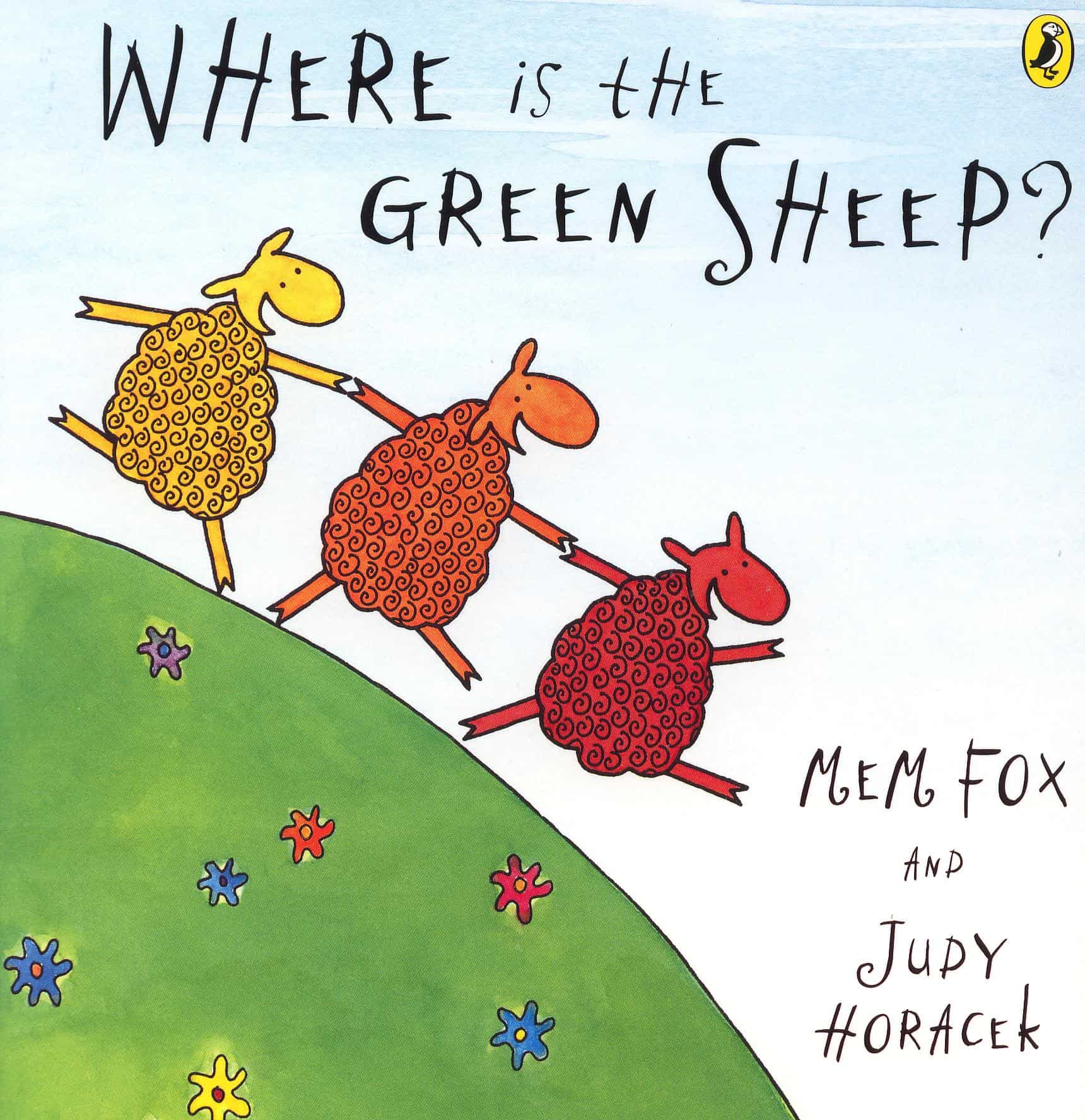
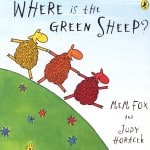
    1. Where is the Green Sheep? – For some time Ella believed my blue knitting yarn came from a blue sheep, the green from a green sheep, the red from a red sheep etc. Hmm.
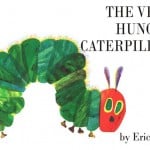
    2. The Very Hungry Caterpillar – If you eat a lollypop, ice cream cone, chocolate cake and cherry pie you may just turn into a beautiful butterfly. Sorry darling, try hippopotamus.
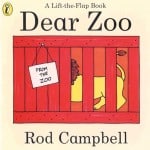
    3. Dear Zoo – Learnt she can have a camel as a pet, if she so wishes. However, it’s likely to be just as grumpy as mum. Mum, on the other hand, scored the cute little puppy dog. Or was that the naughty monkey?
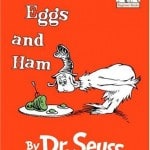
    4. Dr Seuss series – Apart from speaking in rhymes and riddles (if she wasn’t already) she has, on one occasion, requested green eggs for dinner. I refrained from getting out the food colouring.
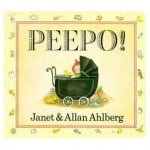
    5. Peepo – Mickey Mouse existed in the olden days, but didn’t quite look as shiny as he does on Mickey Mouse Clubhouse (check out the toy box in the kitchen).
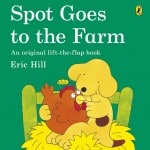
    6. Spot (the dog) series – If you’ve lost something, it’s more than likely hiding under a flap.
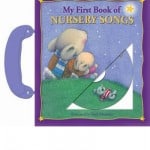
    7. My First Book of Nursery Songs (illustrated by the rather talented Trace Moroney) – Her mum is one damn fine singer. OK, maybe not! But we can dream, can’t we?
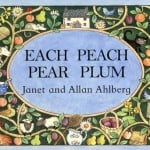
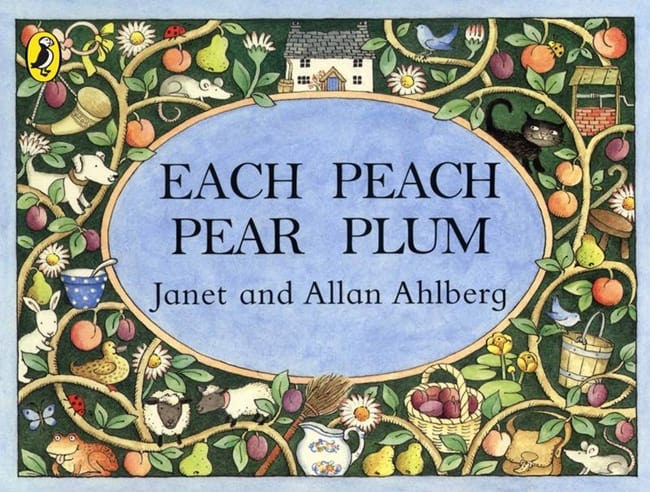
    8. Each Peach Pear Plum – There’s no need to panic if her baby sister’s cradle gets shot out of a tree and she ends up drifting down a river.

    So, what books are the top reads in your house? Is there a book you suggest we introduce Baby Holly to?